
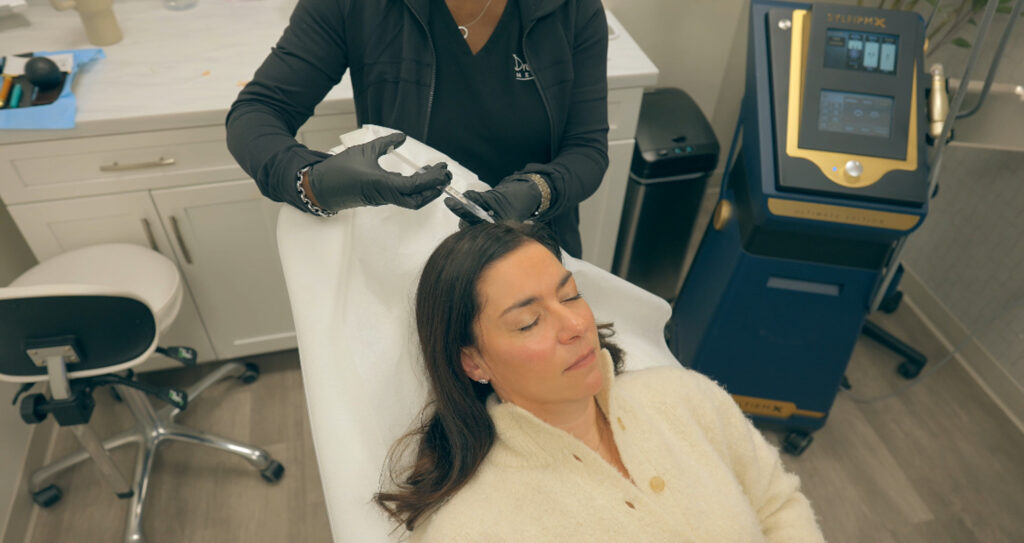
By now, you know that PRP stands for Platelet-Rich Plasma and that it can stimulate hair growth. But how does blood actually help your hair regrow? The answer lies in the science of platelets and growth factors.
What Is a PRP Hair Transplant?
PRP is not a hair transplant. A transplant moves hair follicles from one area to another. PRP uses a concentrated portion of your own blood (platelets and growth factors) to support the scalp and existing follicles. Some people pair PRP with other hair restoration plans, depending on their needs.
The Healing Power of Platelets
Platelets are the part of your blood that rush to a cut or injury. They release proteins called growth factors that trigger healing, repair tissue, and stimulate cell renewal.
When injected into the scalp, these same growth factors do something amazing: they reactivate dormant hair follicles, strengthen existing strands, and improve circulation to nourish the scalp.
How It Works:
- Just like a routine lab test, a small amount of blood is taken.
- The blood is spun at high speed to separate platelets from red and white cells.
- The concentrated platelet-rich plasma is injected into areas of thinning hair.
The process takes less than an hour, with minimal discomfort and no downtime.
How Long Does PRP Hair Treatment Take to Work?
PRP isn’t a one-and-done treatment. Most patients need a series of 3–4 sessions spaced a month apart, followed by maintenance every 6–12 months to sustain results.
Who Is A Good Candidate For PRP Hair Restoration?
PRP is often best for people with early-to-moderate thinning who still have active hair follicles. During a consultation, candidacy is based on your hair loss pattern, medical history, and goals, so expectations are realistic from the start.
Are There Any Side Effects From PRP Hair Treatment?
Most side effects are temporary and may include mild tenderness, redness, swelling, or a headache. Because PRP uses your own blood components, allergic reactions are uncommon, but your provider will review safety considerations based on your health history.
Can PRP Help With Hormonal Or Stress-Related Hair Shedding?
PRP may be part of a plan for some types of shedding, but results depend on what’s driving the hair loss. If hormones, thyroid, iron, or high stress are contributing, addressing the underlying cause alongside treatment can be important.
Who Should Avoid PRP Hair Restoration?
PRP may not be recommended for people with certain blood disorders, active infections, some autoimmune conditions, or those taking specific medications that affect clotting. A thorough medical intake helps ensure the treatment is appropriate and safe for you.
What Should I Do Before And After A PRP Hair Treatment?
Your provider will give personalized instructions, but common guidance includes staying well-hydrated, avoiding alcohol and anti-inflammatory medications when advised, and keeping the scalp clean. After treatment, you may be asked to avoid vigorous exercise, heat exposure, or harsh scalp products for a short period.
Why PRP is Different
Unlike medications, PRP doesn’t alter hormones or rely on chemicals. Unlike surgery, it doesn’t require incisions or transplants. Instead, it harnesses what your body already produces naturally.
Curious if PRP Hair Restoration is right for you? Book a complimentary consultation today and let our team guide you through your options.